
Wolfe Creek
Australia’s outback is vast and largely ‘empty’. It lends itself to those with vivid imaginations, or who enjoy a good horror film. Visitors to Wolfe Creek tend to be curious, not least because it is one of few intact meteoritic craters on Earth; or perhaps because it’s in the middle of massive emptiness where almost anything could happen…
This post is about a ‘turns out…’ moment, but it’s more than that. It represents the correction of an important omission in my telling so far of The Big Trip. I don’t know how it happened; I still can’t believe it nearly did. There had been, however, a few occasions lately when my friend gently reminded me that I hadn’t yet written about the infamous Wolfe Creek in Western Australia. I knew it had been mentioned already in a published blog post, so I didn’t worry too much. What I’d crucially forgotten, however, was that somewhere between Halls Creek and the Bungle Bungles, I had whimsically decided that a place as iconic as Wolfe Creek –– whether you’re a horror-film fanatic or an avid outbacker –– deserved a post all to itself. I promptly forgot about that, however, drawn as I was to Fitzroy Crossing, another place with great-name potential.
Wolfe Creek had always been on my radar; in early days when an intriguing name was enough for a place to be added to my list of must-see destinations; and much later, when it came to planning a final trip around regions of the Australian continent.
There was no one else in Wolfe Creek Crater, or later at the campsite... We were on our own all night, in The Van thank goodness, not a flimsy tent. I tried not to be spooked by remoteness or the reputation of a horror movie I’d never had the nerve to watch. (Three backpackers’ car breaks down; they’re helped by a seemingly friendly local… you can guess the rest… he morphs into a psycho killer.)
Clement weather would have been conducive to a more relaxing camping experience in a place associated with fear and, ultimately, abject horror. A dark oppressive sky added suitable notes of foreboding and perhaps diminishing control over one’s fate, which I could laugh about later more than at the time.
It will add to a sense of adventure if you find your own way to Wolfe Creek Crater National Park. I don’t know if there are any organised tours: I rather hope not. It’s 150 kilometres from the town of Halls Creek in the eastern Kimberley, along the Tanami Road and then a rough access track for the final 23 km to the crater itself. There are cleared sites in the camping area, which has toilets but no water, so you need to carry ample supplies.
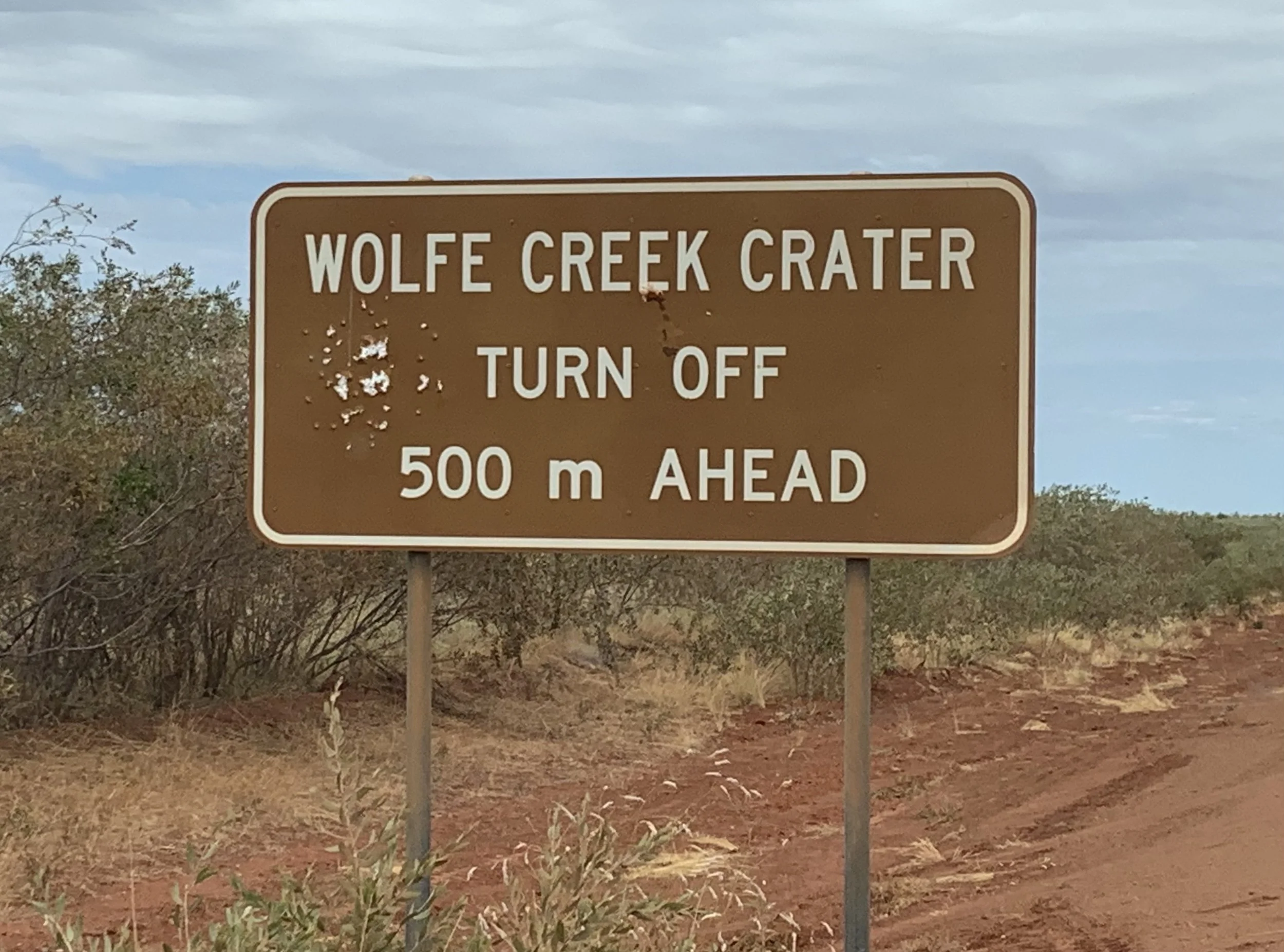
By the way, just so you know: shooters practise their aim by firing at road signs in the remote outback.
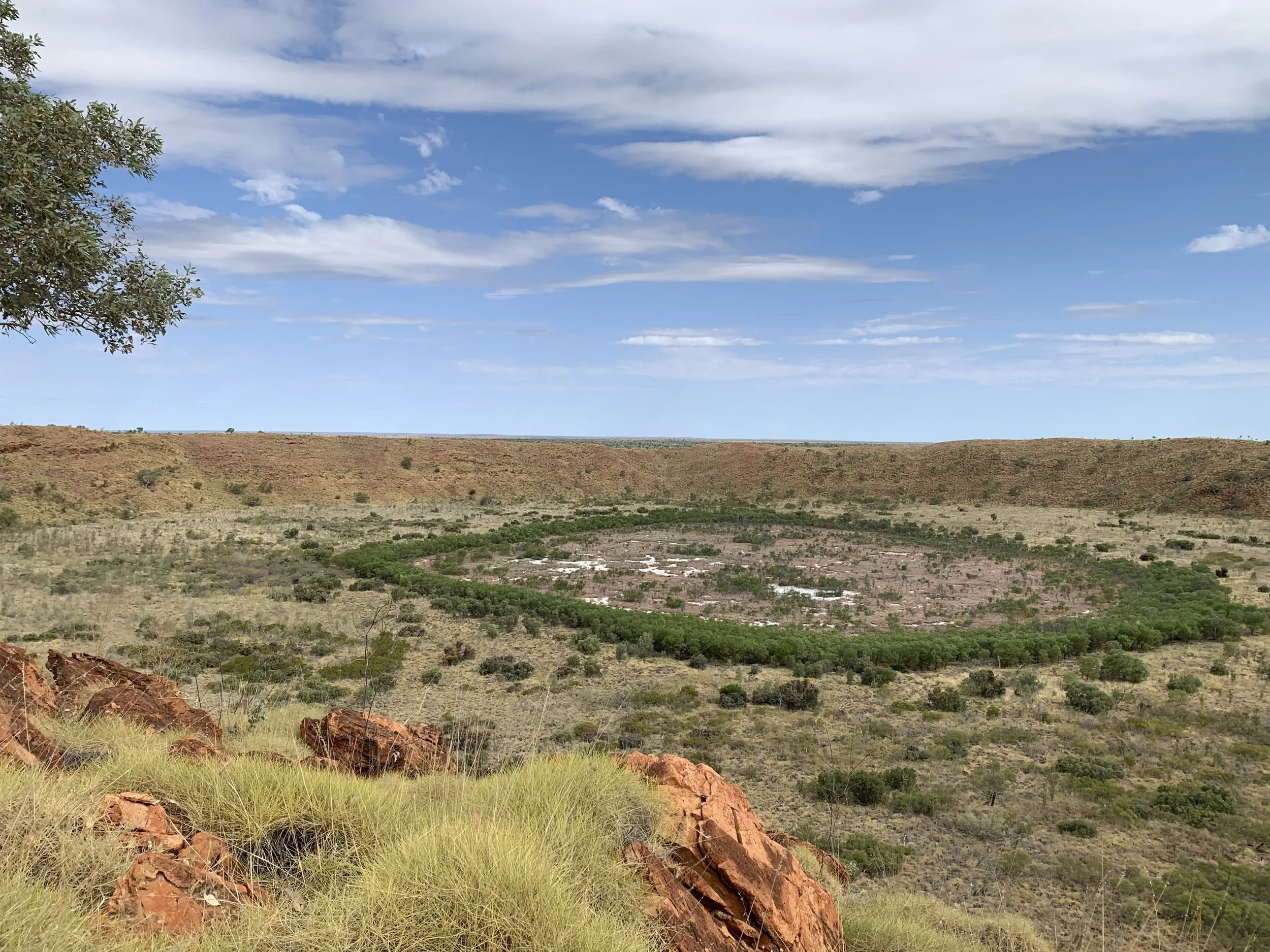
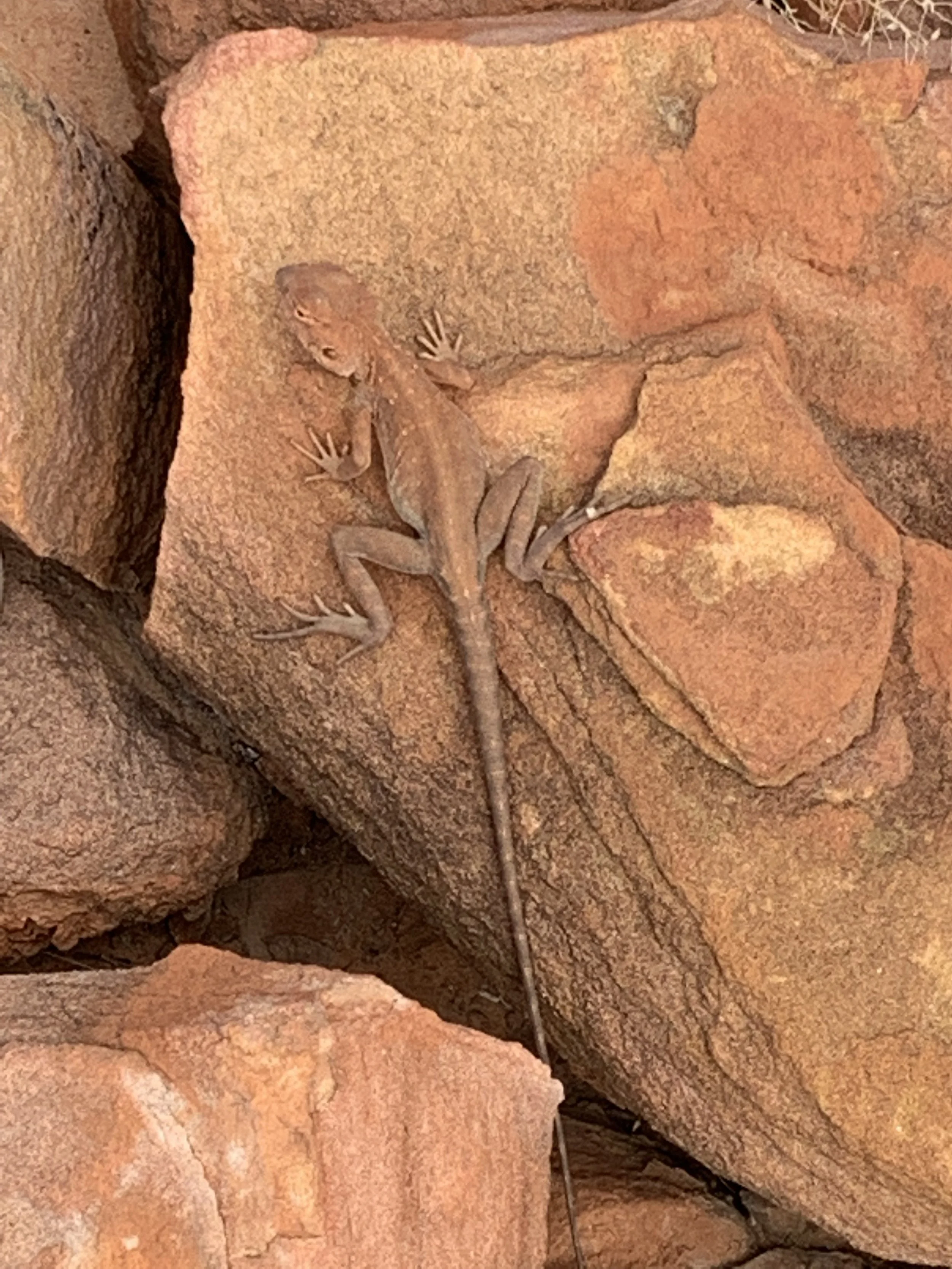
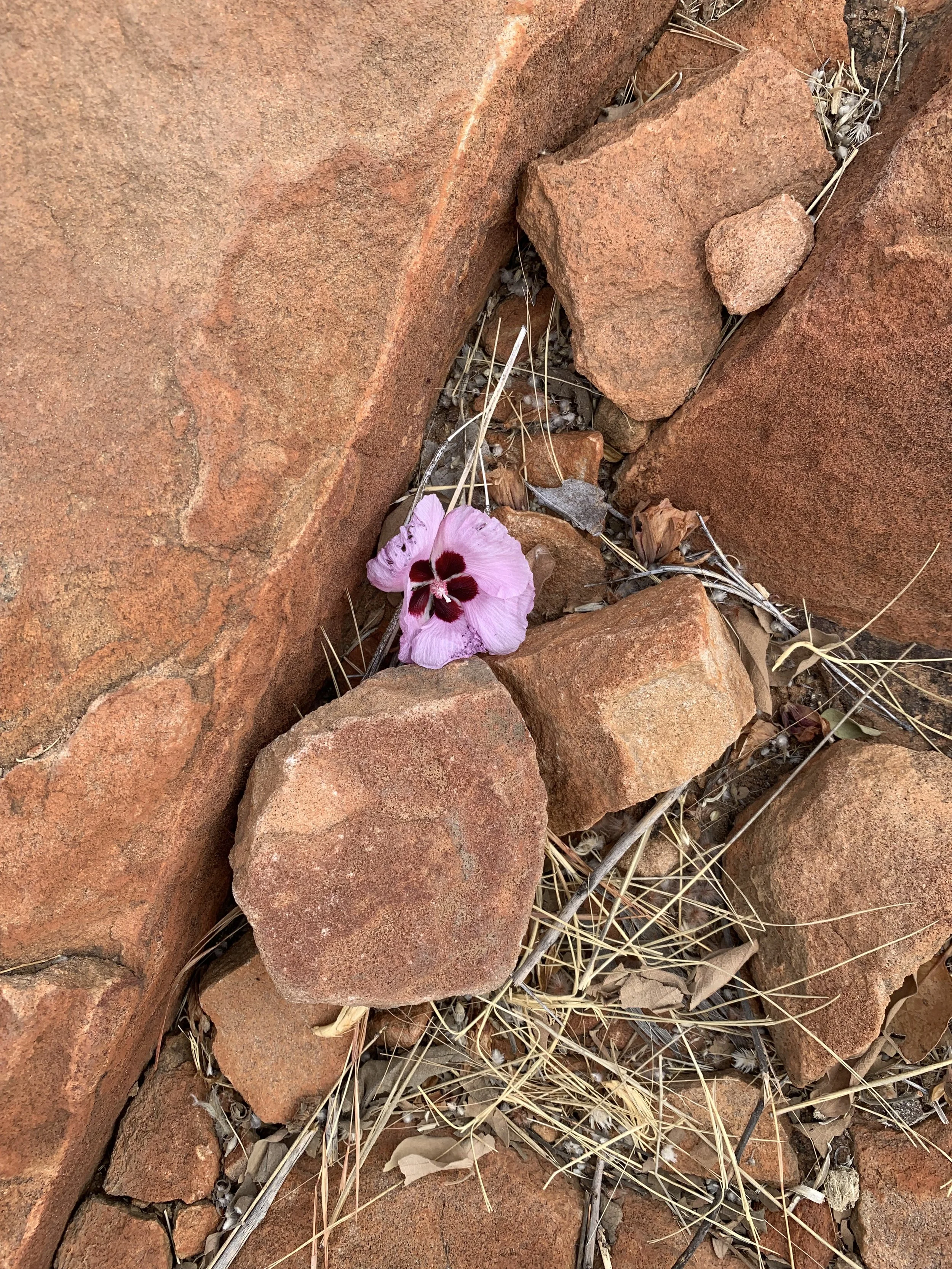
I was pleased to come across fauna and flora, and spot potentially useful puddles on the crater floor.
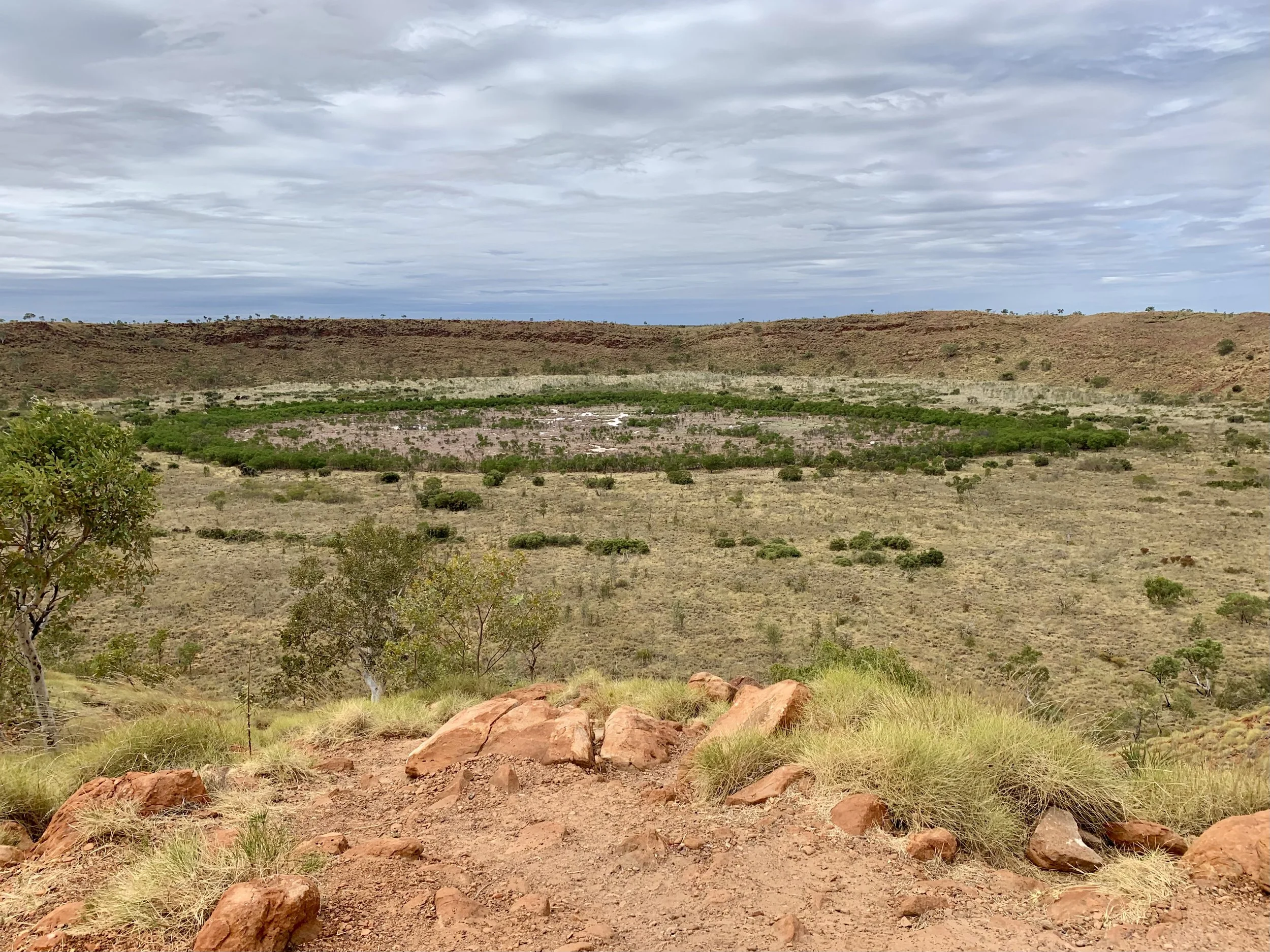
When a rocky object falls from space to the earth’s surface, the surviving remnant is known as a meteorite. Wolfe Creek crater is believed to have formed in this way, less than 120,000 years ago, a figure recently revised down. It is one of the largest of its kind on earth. The explosion on impact would have vaporised most of the meteorite, but some fragments were scattered beyond the crater.
The Indigenous name for this crater is Kandimalal, meaning ‘no potatoes’; the locals having noticed that their normally tasty bush potatoes didn’t thrive in the area surrounding the impact.
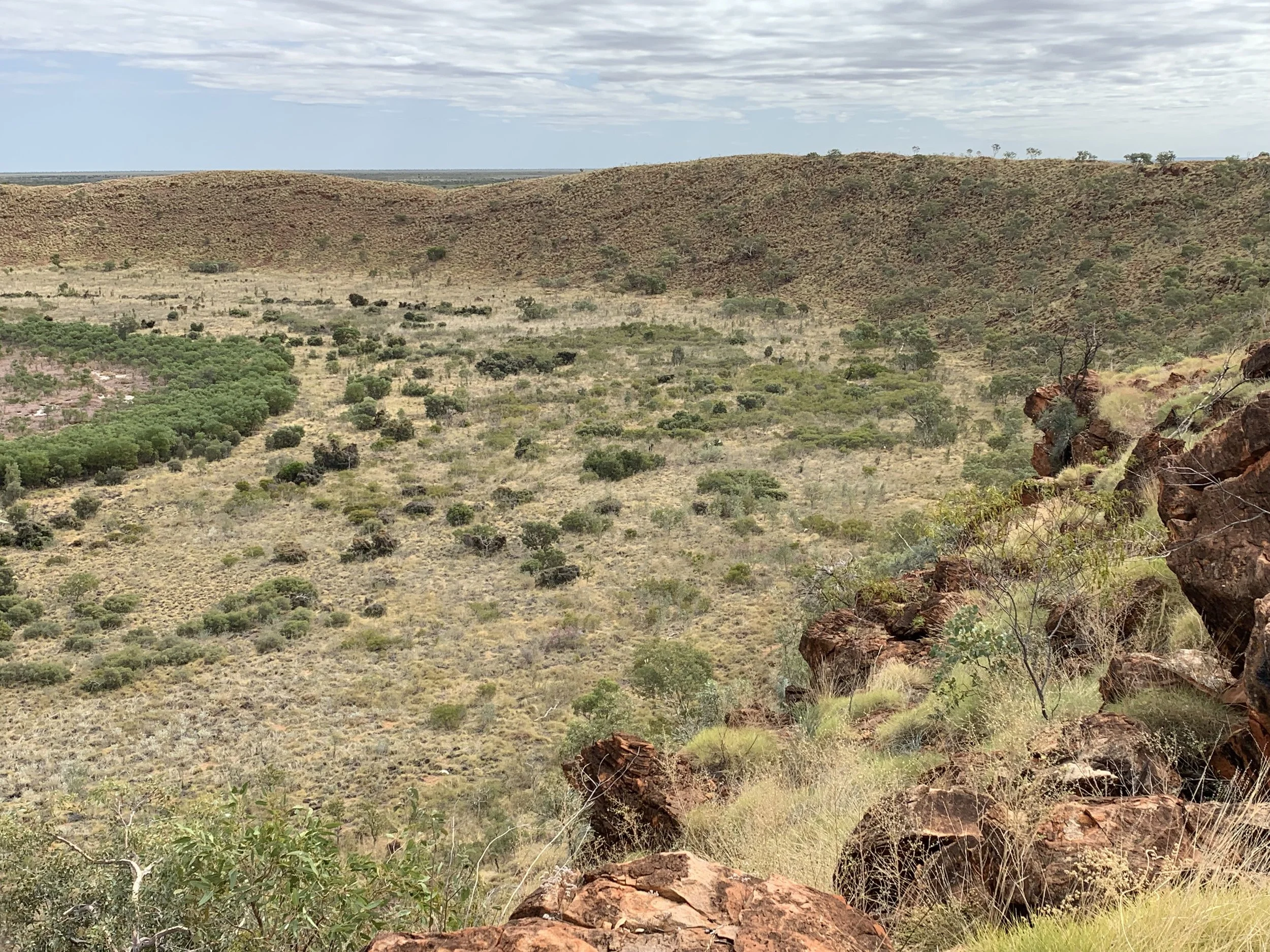
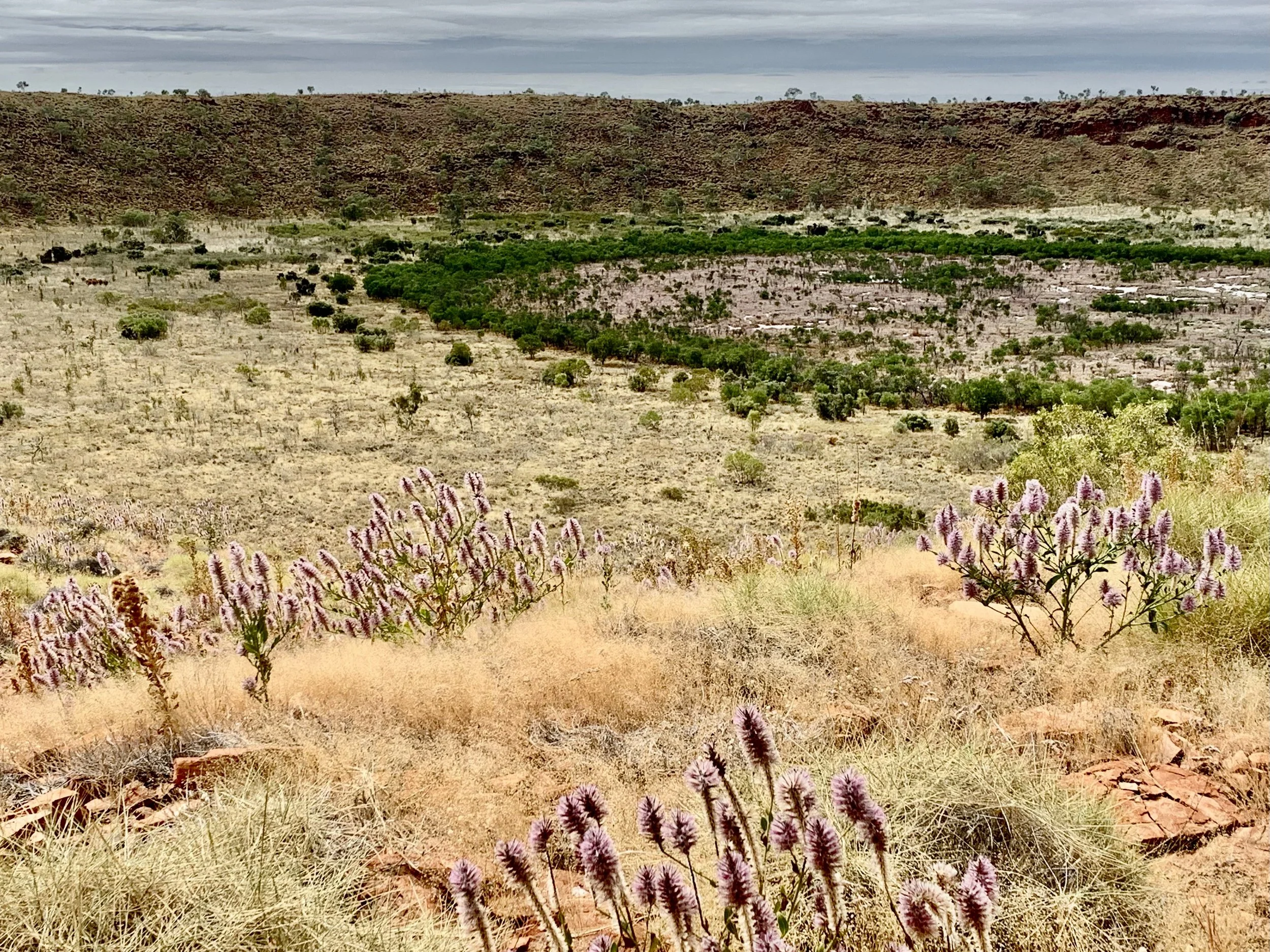
Walking the crater rim was easy going and thoroughly enjoyable, with far-reaching views over land beyond the crater walls; plentiful clumps of pink Mulla Mulla dotted about; and a dark dense ring of shrubs and small trees marking what I assume was a spring line. The salt-encrusted plain in the centre of the crater collects rainwater and groundwater: its higher soil salinity and nitrate content allow plants to grow here that cannot flourish in the surrounding desert.
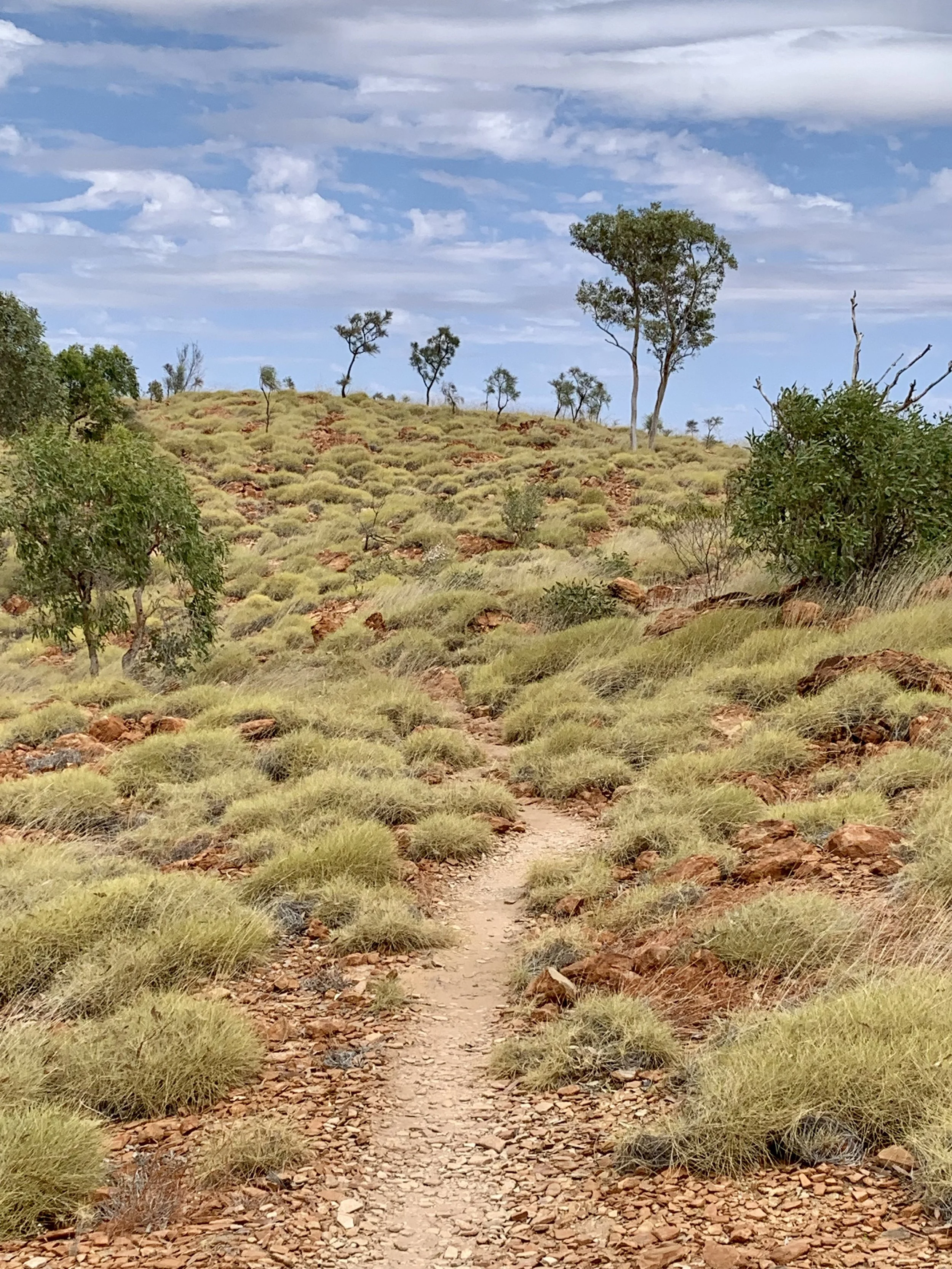
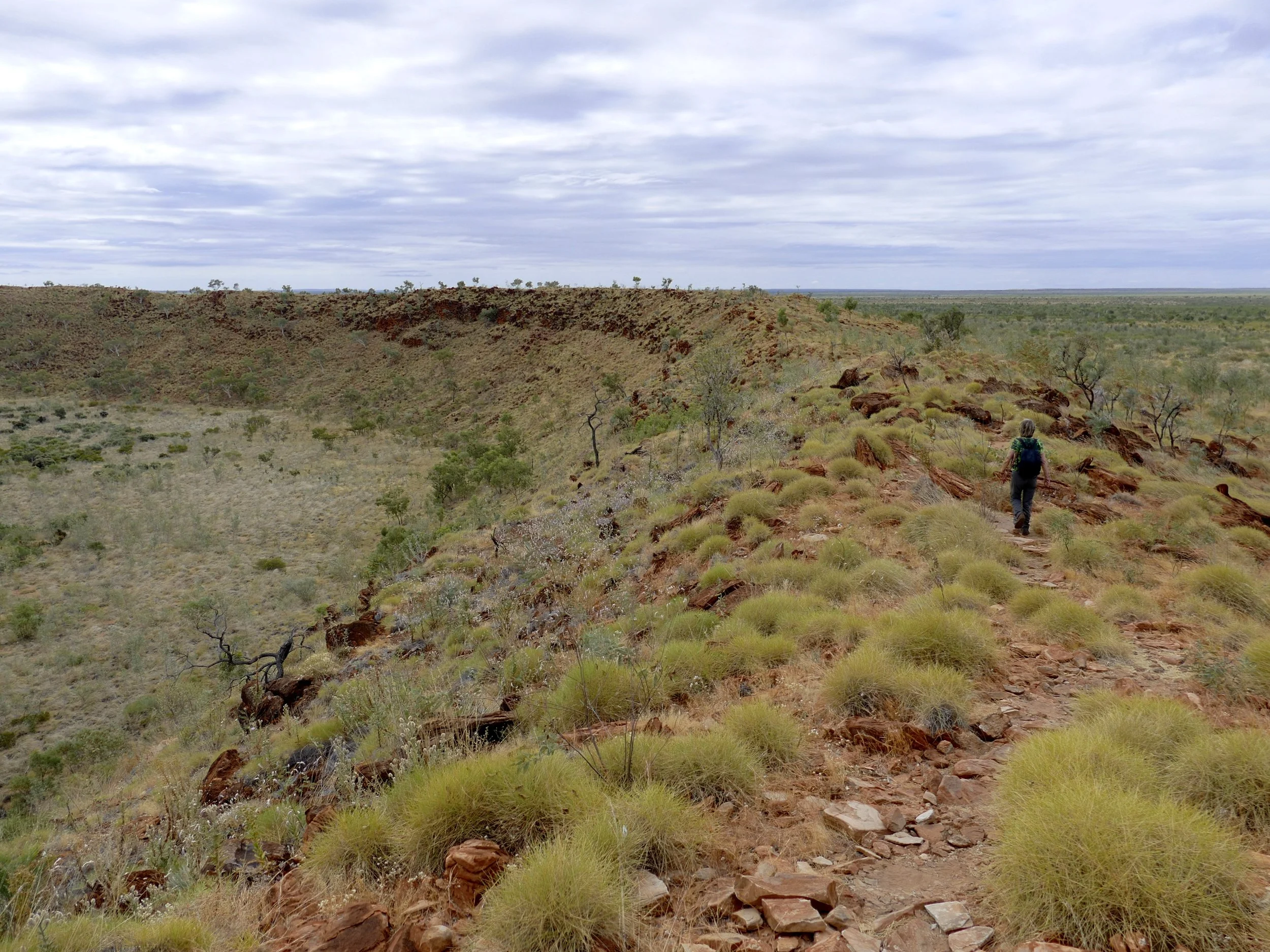

Coming originally from a rather overcrowded region of planet Earth, I never ceased to be amazed in Australia by the possibility that I might be the only person around for hundreds of kilometres. Such a sensation was liberating in a way that is hard to describe: aloneness is this context was not terrifying but sustaining; emboldening. It made me think more assuredly and creatively.
But oh, the grimness and despair of having to turn in the direction of civilisation; sealed roads and samey settlements; ploughed paddocks and trees as windbreaks or barriers rather than truly wild things; to drive out of town according to garish directionals, not faded, broken old pointers. I guess heading home to the smoke has always made me a tad grumpy.